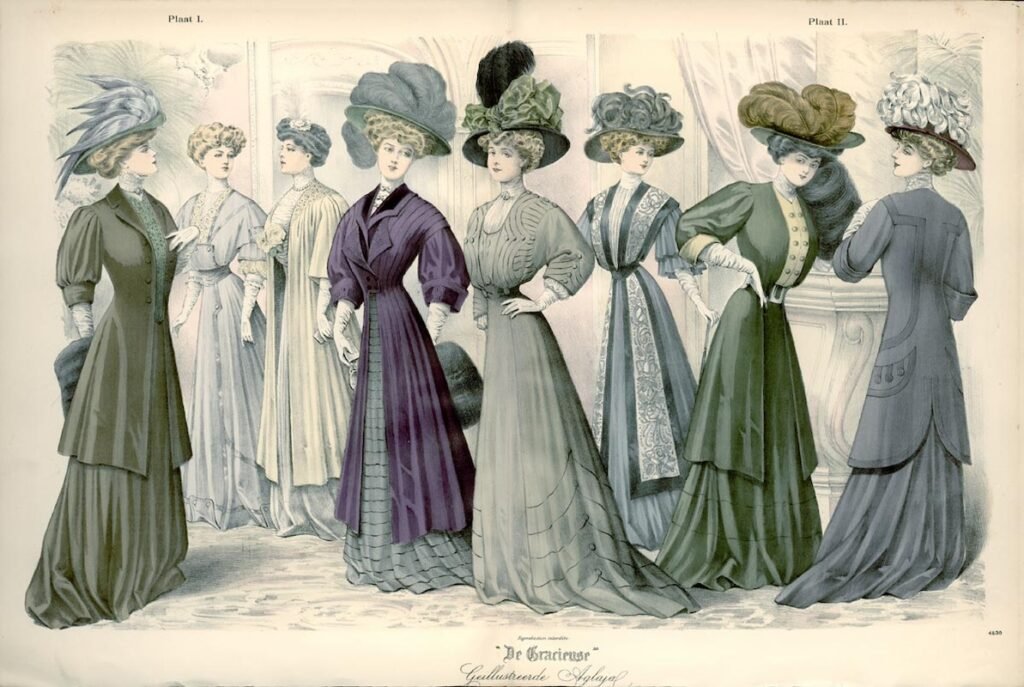
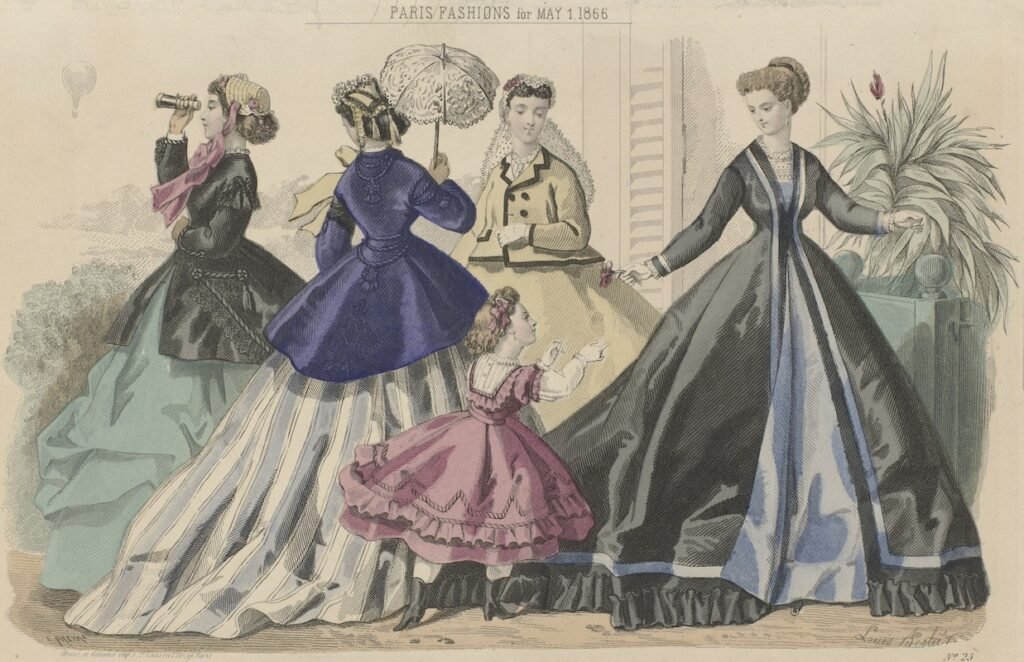
Fashion-wise, the Edwardian age often gets lumped in with the Victorian. It’s understandable. Small waists and long, full skirts were the style throughout both eras. However, there are a few noticeable differences between Victorian and Edwardian clothing.
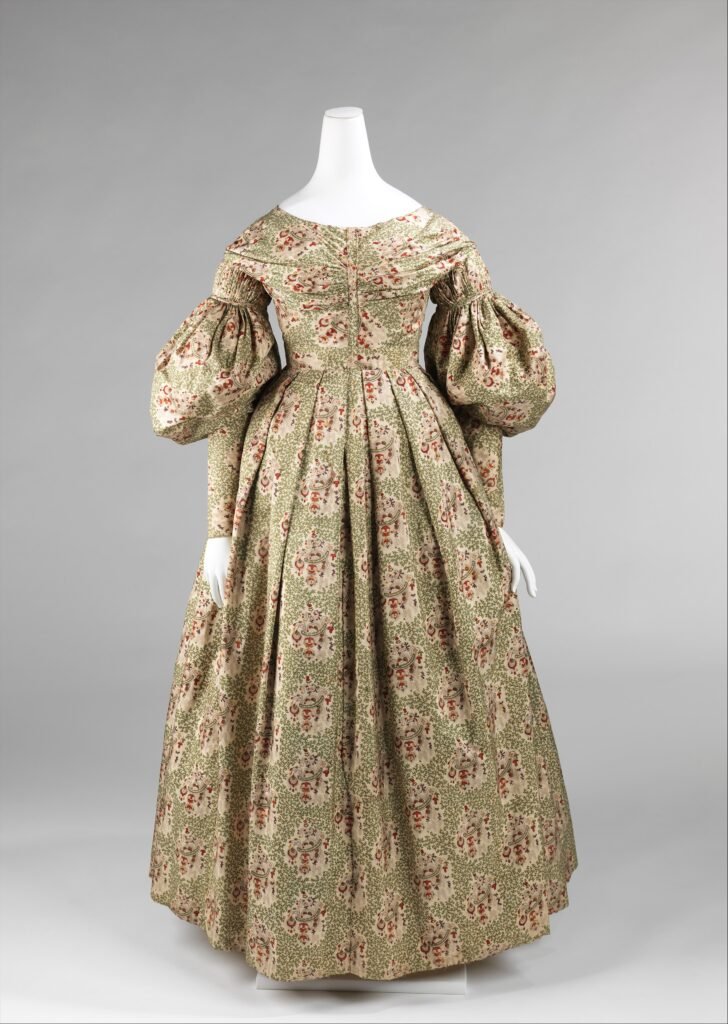
Technically, the Victorian era lasted far longer than the Edwardian — nearly 64 years compared with the nine of Edward VII’s reign. Of course, there was some overlap, with King Edward and his wife, Alexandra, influencing fashion from the late 19th century until World War I broke out in 1914 under the reign of George V and Queen Mary. Still, there were some major differences. Queen Victoria ascended the throne in 1837, at only 18 years of age. At that time, the enormous leg-o-mutton sleeves of the early 1830s had begun to reduce down to a more manageable circumference, becoming quite tight at the top of the arm, with some fullness toward the wrist, while waistlines dropped from just below the bustline to just above the natural waist.
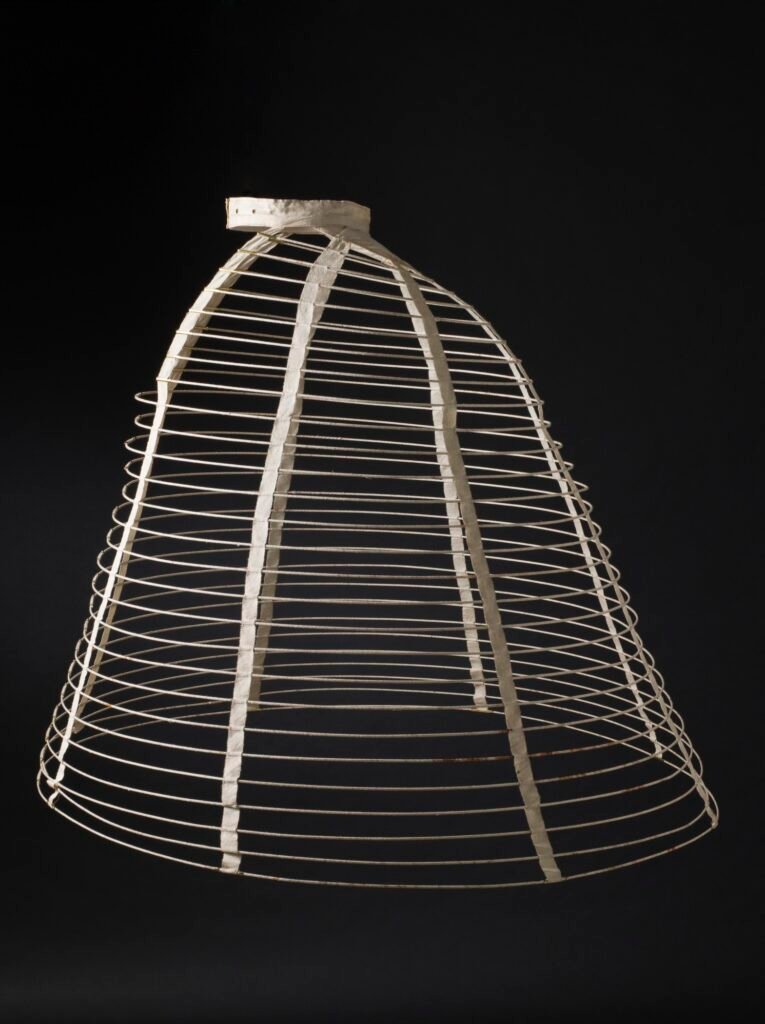
Mid-19th century women were essentially bell-shaped, their skirts first being filled out by multiple layers of petticoats stiffened by starch, cording, and/or horsehair. These heavy layers soon were supplanted by hoops made of thin, lightweight steel connected to each other by cotton tapes. By the 1860s, skirt circumferences had expanded to the point where they were widely considered a danger to the wearer and prompted many a satirical illustration in publications of the time, such as in the one from a series below about dressing a young lady in 1860. Although it may seem that women could never sit down in such contraptions, the hoops or crinoline simply folded down when sitting. Imagine being in the center of a large slinky and you can get some idea of what it might have been like.
Although skirts may never have reached quite such great widths as those mocked in satirical magazines, nevertheless, many women died from immolation when the edge of their ridiculously wide skirt got too near the fireplace, or when it got caught in carriage wheels or other machinery.
With the discovery of aniline dyes in the late 1850s by the British chemist, William Perkin, gowns from the 1860s onward were often made of fabrics with surprisingly brightly colors, particularly various brilliant shades of magenta, purple, pink, blue, and yellow.
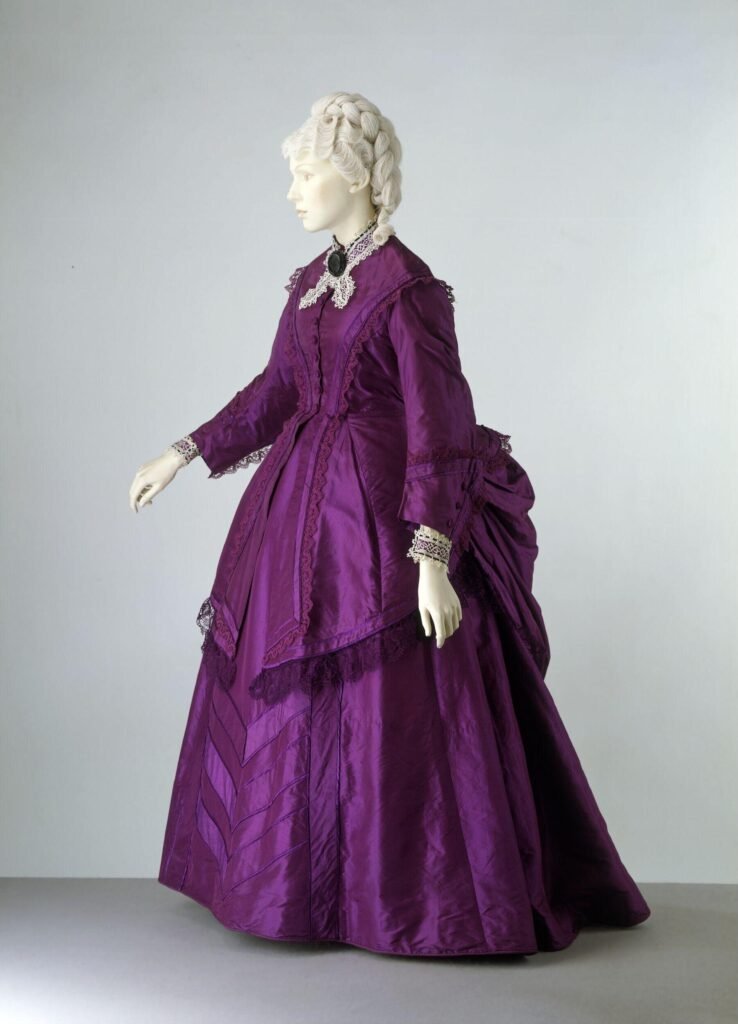
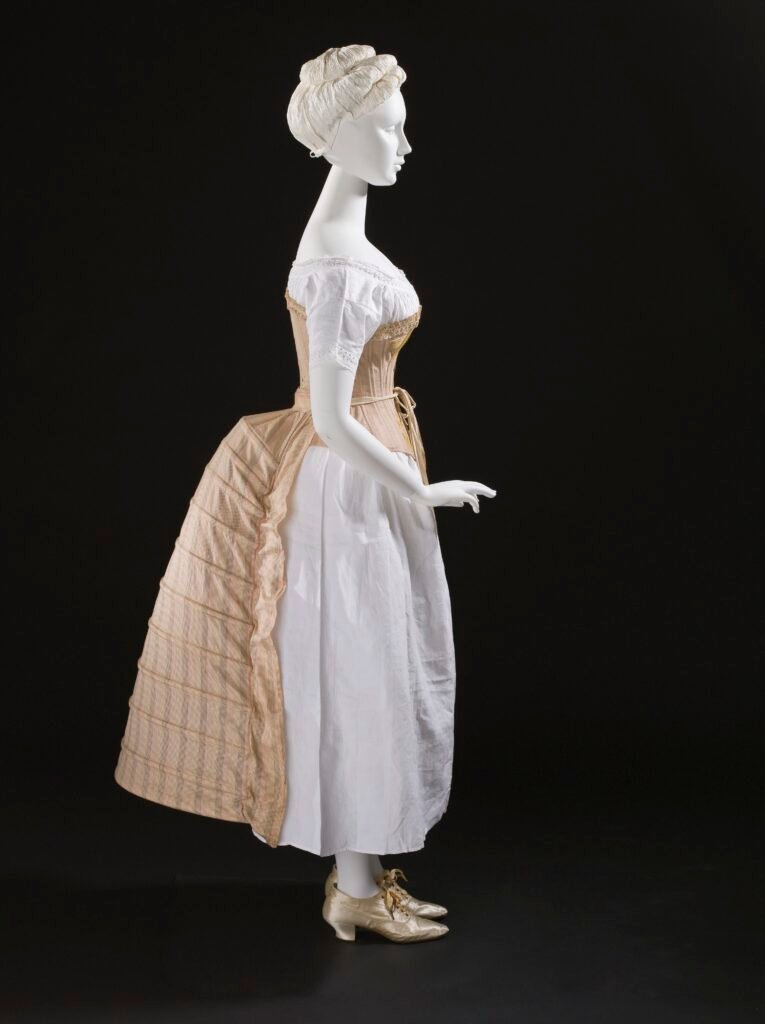
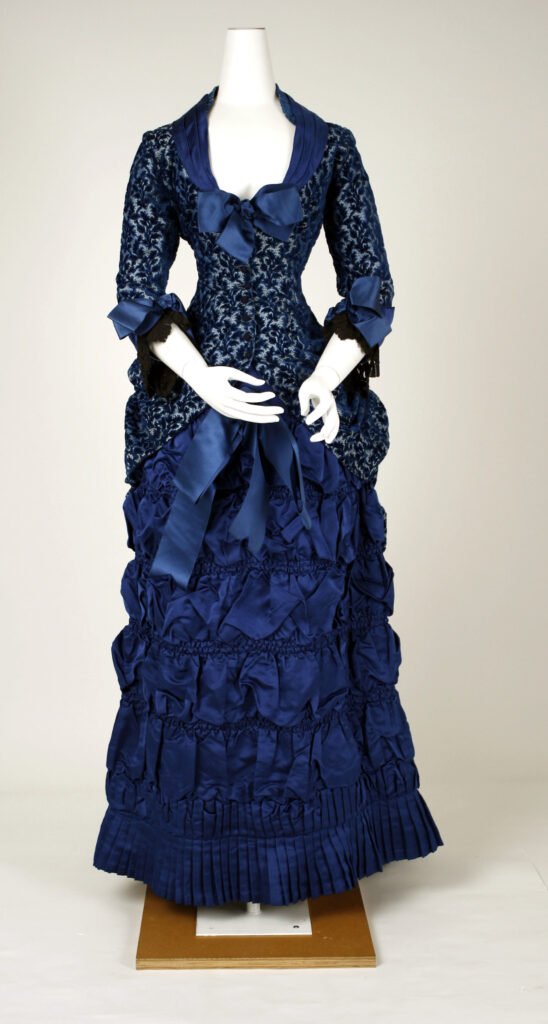
In the 1870s and 1880s, skirts’ circumference narrowed, with the bulk of fabric being brought around to the back, where the rear end was emphasized with the help of a bustle. Now, the silhouette was relatively flat in front while between the bustle and the length of her train, one could not could get any nearer to a lady from the back than a couple of feet.
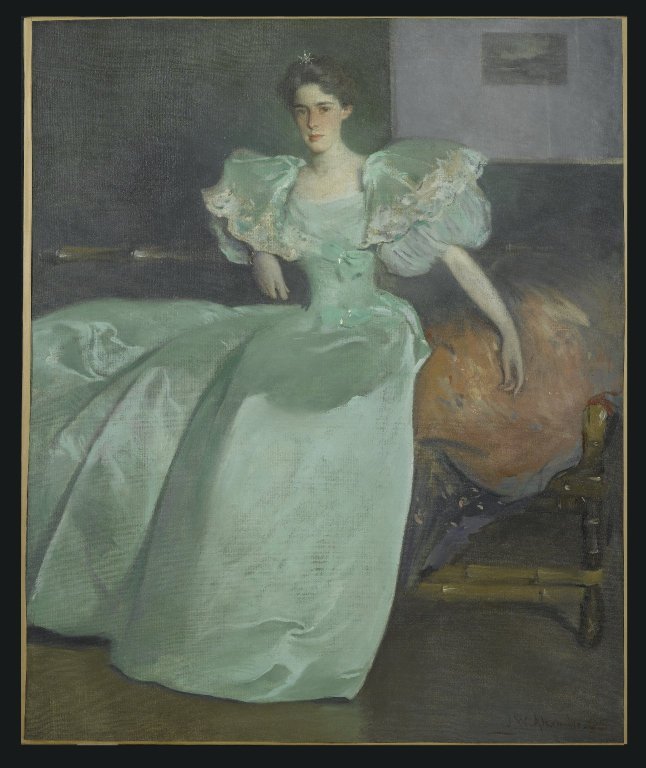
The last decade of the century, which was also the last of Victoria’s reign, showed a return to the shapes similar to those of when she ascended the throne. Sleeves became huge in the middle of the decade, and skirts were again shaped like bells or trumpets. Now, however, there was more emphasis on the natural waist, which was intended to look as small as possible with the help of a whalebone corset and a hip pad.
With the new century and a new monarch, the Edwardian age heralded the casting off of perpetual mourning, with brighter colors or pale pastels taking the place of somber black and purple, even for older ladies. The shape of the new corsets helped to take some pressure off the waist and accentuated the hips in the back, with a full, low bosom in front, creating the famous Edwardian “S” shape if viewed from the side. Whereas skirts early in the century were still voluminous, as they narrowed, hats bean to take on an ever wider circumference. The “Merry Widow” hat, named for the hat made in 1907 for Lily Elsie’s character in the play of the same name, is one of the hallmarks of the Edwardian age.
As the decade wore on, with more women campaigning for suffrage and greater freedom, they were correspondingly less encumbered by corsets and voluminous, heavy skirts. The princess line came into vogue, and although hems were still long, they were inching up slowly. By 1910, a woman’s silhouette was essentially T-shaped, with wide-brimmed hats and columnar gowns.
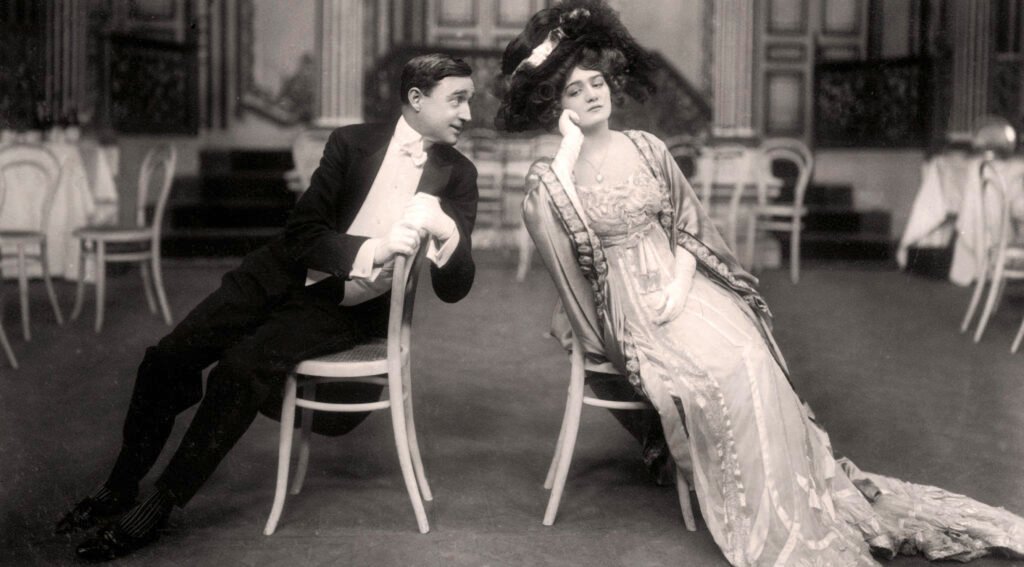
When the Edwardian age definitively came to an end with the start of WWI in 1914, women had mostly emancipated themselves from the corset. Although hemlines were still around ankle length, the only constraining items of clothing were the brassiere and girdle.
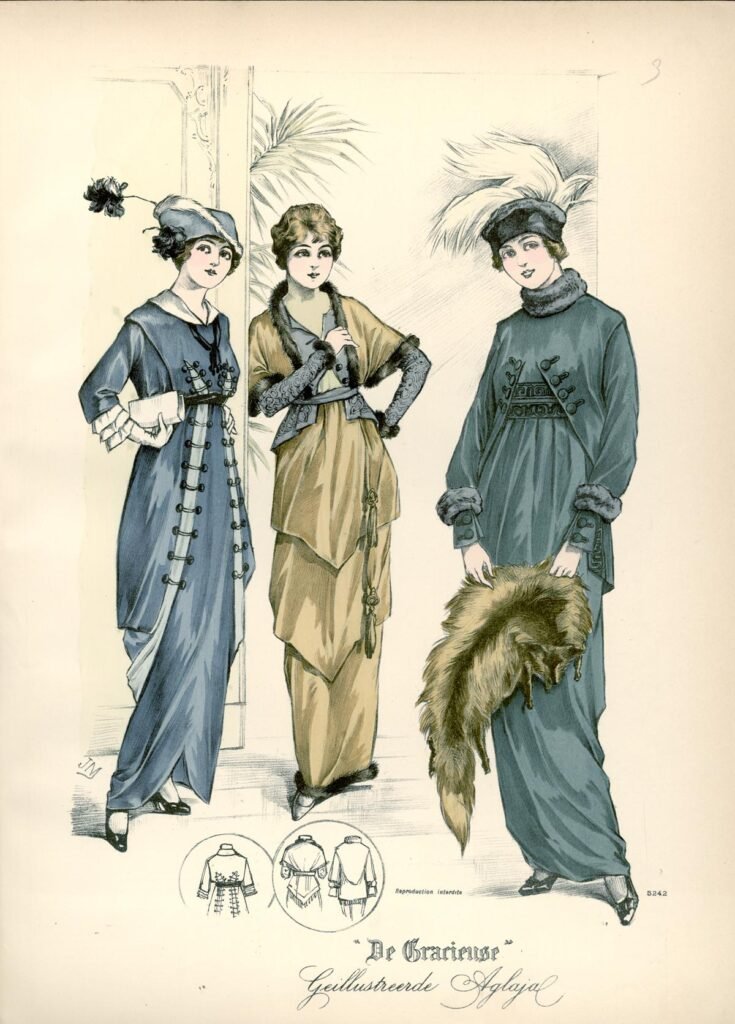
Women would never again return to such constraining garments, choosing comfort over beauty when faced with the daily pressures of the modern world.
Leave a Reply